


We deliver a complete FPGA design package, including configuration files, pin assignments, constraint files, and hardware integration guidelines. Our package also includes PCB layout recommendations to ensure signal integrity and timing closure.

FPGA Design Services
Our FPGA engineering services help overcome performance limitations in systems that require real-time signal and video processing, or high-speed data streaming. We optimize FPGA logic to boost throughput and reduce latency where software falls short. The result is a reliable platform that can evolve with new requirements without extensive hardware changes.

What we do
With our FPGA design services, compute-intensive functions are implemented directly in hardware, reducing latency and offloading processors from demanding tasks. We develop reliable FPGA solutions for video and image processing, machine vision, industrial networking, and other high-performance applications. From architecture definition and FPGA design to validation and production support, we identify bottlenecks early, optimize resource utilization, and help systems meet performance, power, and scalability targets.

Architecture Development
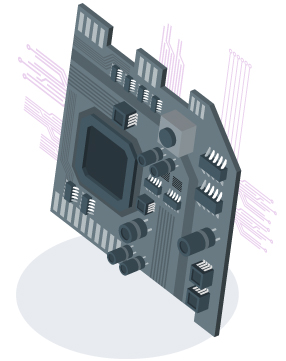
We develop FPGA architectures designed to support future product updates without hardware redesign. By optimizing data paths, memory access, arbitration, and I/O configuration, we ensure reliable communication with external devices and memory subsystems, including DDR. The result is a scalable architecture that reduces long-term maintenance costs and allows new functionality to be added through FPGA firmware updates.
FPGA PCB Design
High-performance FPGA systems start with the right board architecture. Our FPGA board design services help you build systems that process data locally with low latency and predictable performance. We develop PCBs that support high-speed interfaces such as PCIe, LVDS, MIPI, SATA, and Ethernet, while addressing signal and power integrity from the start. The result is reliable hardware for industrial automation, machine vision, edge computing, and other demanding applications that can evolve through FPGA reconfiguration without major hardware redesign.
IP Core Development & Integration
We integrate proven IP cores into FPGA and CPLD designs to reduce development time and lower project risk. Our engineers customize Verilog and VHDL soft IP for communication, control, DSP, and memory subsystems, eliminating the need to develop standard building blocks from scratch while speeding up verification and ensuring compatibility with existing hardware. This includes reliable FPGA solutions for software-defined radio (SDR) systems with QAM, QPSK, and OFDM modulation/demodulation, as well as video and image processing applications including scaling, deinterlacing, alpha blending, gamma correction, color space conversion, and FIR filtering.
FPGA Verification
Successful field programmable gate array design depends on more than correct implementation—it requires thorough verification under real operating conditions. We perform functional verification, timing analysis, signal integrity validation, and hardware validation to ensure reliable data exchange across all critical interfaces. Using simulation together with oscilloscopes and logic analyzers, we identify subtle timing and connectivity issues before production. The result is a stable FPGA platform ready for deployment in safety-critical, industrial, networking, and embedded applications.
CPLD Design
CPLDs are a practical choice for control systems that need deterministic, high-speed logic without the complexity of an FPGA. We design CPLD architectures that offload time-critical tasks from microcontrollers, improving real-time performance while keeping hardware compact and cost-effective. This approach works well for industrial controllers, communication interfaces, and timing-critical digital logic. Built-in non-volatile configuration memory, low power consumption, and fast startup make CPLDs a reliable choice for compact embedded systems.
What You Get

Design Package and Integration Guidelines

Simulation and Verification Reports
You receive simulation and verification reports, including functional and timing simulations, HDL testbenches, post-route results, timing analysis, power estimation, and device utilization reports. They confirm that the design meets functional, timing, and performance requirements before production.

Source Code and Design Files
We transfer the complete FPGA project, including VHDL and Verilog source code, project files, and IP configuration. Your team can maintain, modify, and extend the design independently.

Intellectual Property Rights
After project completion, you receive full ownership of all intellectual property, including HDL source code, FPGA architecture, custom IP, design documentation, and project deliverables.

Our projects
Check Integra’s previous projects delivered within our CPLD and FPGA design services.

System and Application Software for Monochrome and RGB LED Matrix Display
The display integrates with traffic management systems. The software created provides effective communication with the traffic management system.

Custom Software Development for an Electronics Measurement Device
We designed data transmission and software licensing mechanisms, test and measurement apps, apps for calibration and streaming, and other software.

A USB Keylogger for Recording Keystrokes Typed on Any PC
The device records the data being transmitted by a keyboard. It captures every key pressed by a user and stores this information in a text file.
"Integra Sources' extensive preparation beforehand helped give confidence to the client that they chose the right partner. Despite the time difference, they are able to stay in constant communication. Integra's dedication to the project has led the client to develop an ongoing relationship."

Christophe Baudia
CEO at GeoMoby

"The database has satisfied all scope requirements. The upgrades have improved communication and performance. Team strengths include accessibility and problem-solving and they are unafraid to research problems and develop their own solutions. Integra demonstrated strong management skills when they managed our servers for a week during an important trade show; we showcased our product at the event. Communication channels are always fluid and straightforward."

Eduardo Ruiz
Founder & CEO at Ruiz Aerospace Manufacturing
"Integra's team helped us clarify our requirements and change systems architecture to achieve the final goal. I'd say that the flexibility and enthusiasm of both engineering and management teams throughout the whole project were some of the things we value most in our collaboration."

Dr. Sam Wass
University of East London
Awards






Show more
Frequently Asked Questions
Read this information to better understand FPGA PCB design.
How do you handle timing closure on complex designs?

Can you take over an existing FPGA design that needs rework or optimization?
How long does a typical FPGA development project take?
What IP cores do you use?
Do you validate FPGA firmware?
Have you worked with SoC systems that use both FPGA and CPU?
What is the main difference between ASIC and FPGA?
Our tech stack





















































Industries
LEARN MORE ABOUT THE INDUSTRIES WE WORK WITH



Telecommunications & Networking
High-throughput data processing, protocol acceleration, and low-latency signal handling for networking equipment and telecommunications infrastructure.


Science & Research
High-speed data acquisition, signal processing, and instrumentation control for scientific research and test & measurement equipment.

Consumer Electronics
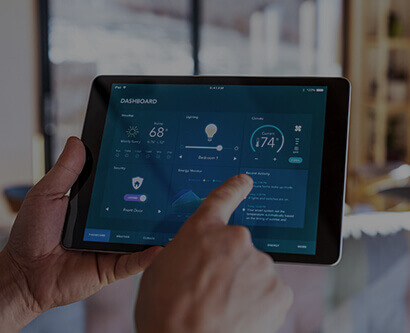
Real-time video and audio processing with low-latency hardware acceleration for wearables and smart home devices.

Healthcare
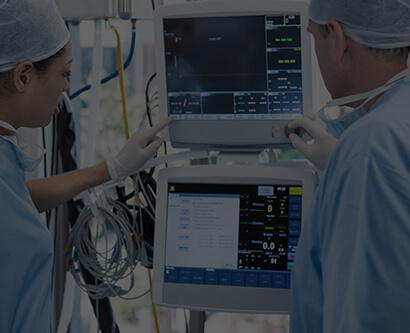
Real-time image reconstruction and high-speed data processing for diagnostic imaging devices, plus low-latency signal processing for physical therapy equipment.

Robotics
Deterministic motor control loops and real-time sensor processing for wheeled robots and drone flight controllers.

Extractive Industry & Manufacturing
Deterministic industrial protocols and real-time sensor processing for PLC-based automation and IIoT gateways.

Telecommunications & Networking
High-throughput data processing, protocol acceleration, and low-latency signal handling for networking equipment and telecommunications infrastructure.

Science & Research
High-speed data acquisition, signal processing, and instrumentation control for scientific research and test & measurement equipment.
We've worked with enterprises and startups from Europe, the USA, Australia, and Asia



























Related services
Check out other services we provide.

Kernel and Driver Development
We implement device driver development projects for Linux, Windows, and macOS and develop Linux kernel modules for embedded devices. The...
LEARN MORE 
LEARN MORE

Printed Circuit Board (PCB) Design and Layout Services
Schematic design, PCB layout, and fabrication – we offer a complete set of services for implementing printed circuit boards.
LEARN MORE
LEARN MORE

Firmware Development Services
As a firmware development company, we have extensive experience with hardware, operating systems, low-level diagnostic and performance tools.
LEARN MORE
LEARN MORE